
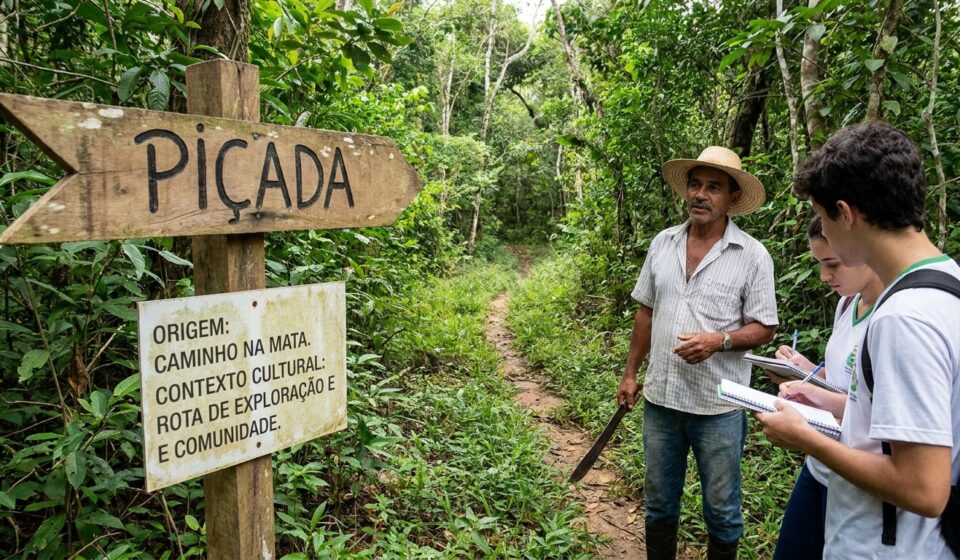

The term piçada is a word that can appear in different linguistic and regional contexts, and its meaning may vary depending on usage. In many cases, it is associated with Portuguese-influenced languages or dialectal variations where similar-sounding words can refer to actions, textures, or informal expressions.
Because piçada is not a globally standardized term with a single fixed definition, understanding it requires looking at linguistic roots, regional usage, and possible interpretations. In some contexts, it may relate to descriptive language used in everyday speech, while in others it may appear in slang, informal writing, or regional expressions.
Linguistic Roots of Piçada
The word piçada appears to be derived from Romance language structures, particularly Portuguese or closely related dialects. In Romance languages, suffixes like “-ada” are often used to describe:
- An action or result of an action
- A collective or repeated form of something
- A descriptive state or condition
The root “picar” (in Portuguese and Spanish-related forms) generally relates to actions such as “to prick,” “to chop,” or “to cut into small pieces.” From this linguistic base, words like picada or piçada may emerge in different dialects or informal spelling variations.
However, spelling differences often occur across regions, especially in spoken language transcriptions.
Possible Meanings of Piçada
Because piçada is not a strictly standardized dictionary term in most modern languages, its meaning can shift depending on context. Some of the most common interpretations include:
1. Something Chopped or Minced
In some informal or regional usage, piçada may refer to something that has been cut or chopped into small pieces. This could apply to food preparation or physical objects that have been broken down.
2. A Prick or Sting (Related Forms)
Words derived from “picar” in Romance languages often relate to stinging sensations, such as insect bites or sharp sensations on the skin. In this sense, piçada could be interpreted as a variation of “picada,” meaning a bite or sting.
3. Slang or Informal Expression
In certain dialects or informal speech contexts, piç-ada may appear as slang, where meaning depends heavily on local usage. Slang terms often evolve quickly and can differ significantly between regions.
Piçada vs Picada
One of the most important distinctions to understand is the difference between piç-ada and picada.
- Picada is a recognized word in Portuguese and Spanish, meaning:
- A bite or sting (e.g., insect bite)
- A path or trail (in some contexts)
- Something chopped or minced (in culinary usage)
- Piçada, on the other hand, may appear as:
- A regional spelling variation
- A phonetic adaptation
- A non-standard or informal form
In many cases, piçada is simply a variation influenced by pronunciation rather than a separate formal word.
Regional and Cultural Usage
Language evolves differently across regions, and piçada may appear in localized speech patterns.
1. Portuguese-Speaking Regions
In Portuguese-speaking areas, especially in informal conversations, variations in spelling and pronunciation are common. Piç-ada may be heard in spoken dialects where phonetic spelling reflects how people actually pronounce “picada.”
2. Rural and Informal Speech
In rural or informal settings, language often becomes more flexible. Words like piçada may be used without strict grammatical rules, relying instead on shared understanding within the community.
3. Digital and Social Media Usage
On the internet, spelling variations often spread quickly. Users may adopt piçada in memes, posts, or informal writing where linguistic accuracy is less important than expression or tone.
Contextual Interpretations
Understanding piç-ada requires analyzing context, because meaning can shift depending on how it is used.
Culinary Context
If used in cooking-related discussions, piç-ada may refer to chopped ingredients or food preparation methods.
Biological or Natural Context
If related to insects or nature, it may refer to a bite, sting, or puncture-like sensation.
Slang Context
In informal speech, it may carry emotional or expressive meaning depending on tone, region, and speaker intent.
Why Words Like Piçada Vary So Much
Language variation is a natural process influenced by several factors:
1. Oral Tradition
Many regional words are passed down verbally before being written, leading to spelling differences.
2. Accent and Pronunciation
Different accents can alter how words sound, which influences how they are written informally.
3. Lack of Standardization
Not all words become part of formal dictionaries, leaving room for variation.
4. Internet Language Evolution
Online communication accelerates the creation and spread of informal terms.
You might also like: OTI IAS: A Complete Guide to IAS Coaching and UPSC Preparation
Importance of Context in Understanding Piçada
Because piçada does not have a universally fixed meaning, context becomes essential. Without context, interpreting the word correctly is difficult.
For example:
- In a cooking discussion → likely refers to chopped ingredients
- In a medical or natural context → could refer to a sting or bite
- In casual speech → could be slang or informal expression
Understanding surrounding words and cultural background is key to accurate interpretation.
Common Misunderstandings
People often misunderstand words like piçada because:
- They assume it has a single dictionary meaning
- They confuse it with similar formal words like picada
- They ignore regional or dialectal influence
This highlights the importance of linguistic flexibility when dealing with informal or regional terms.
Conclusion
Piçada is a linguistically flexible and context-dependent term that appears to stem from Romance language roots, particularly related to the word “picar.” While it is not a standardized dictionary word in most formal language systems, it is used in informal, regional, or phonetic contexts where meaning depends heavily on usage.
In some cases, it may refer to chopped food, a bite or sting, or simply represent a spelling variation of pi-cada. Its interpretation always depends on context, region, and speaker intent.
Ultimately, piç-ada is a good example of how language evolves naturally, adapting to pronunciation, culture, and everyday communication.